
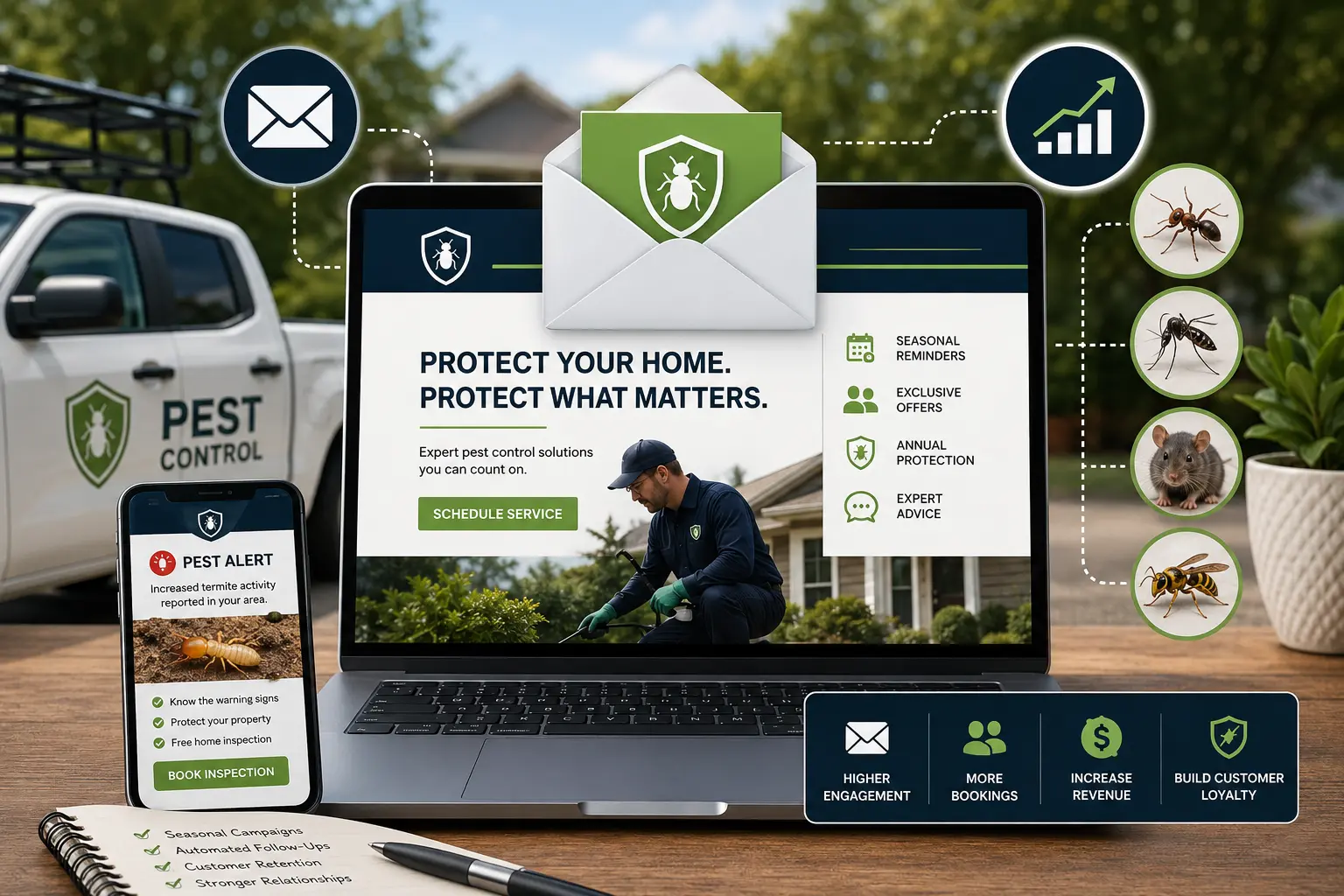
Email Marketing For Pest Control Companies – Key Revenue Drivers
Email marketing is one of the highest-ROI growth channels available to local pest control operators. While home services often rely heavily on pay-per-click ads or local service ads to capture emergency calls, email marketing builds recurring revenue, increases customer lifetime value (LTV), and keeps your brand top-of-mind before infestation season hits.
Key Revenue Drivers for Pest Control Email Campaigns
1. Seasonal Prevention & Pre-Service Reminders
Pest activity follows predictable seasonal cycles. Email campaigns allow you to educate homeowners and pitch preventative treatments right before specific pests become active in your region.
- Spring (Termite & Ant Season): Focus on property inspection offers, soil treatments, and perimeter barriers.
- Summer (Mosquito, Wasp & Tick Season): Promote yard treatments, party package sprays, and monthly maintenance plans.
- Fall (Rodent & Wildlife Exclusion): Highlight rodent entry point sealing, attic inspections, and crawl space insulation.
- Winter (Overwintering Pests & Indoor Care): Focus on pantry pests, spiders, and interior perimeter protection.
2. Converting One-Time Emergency Calls into Annual Contracts
A customer who calls for a sudden bed bug or yellowjacket emergency is a one-time transaction unless you nurture them. Automated email follow-up sequences transition emergency single-service customers into recurring quarterly or monthly service plan subscribers.
- Day 1 Post-Service: Send a digital receipt alongside clear care instructions (e.g., when pets can enter the yard, what to expect post-treatment).
- Day 7 Post-Service: Check in on treatment efficacy and request feedback or a Google review.
- Day 21 Post-Service: Introduce the Annual Protection Plan, framing the recurring subscription as a cost-saving alternative to future emergency visits.
3. Automated Re-Engagement & Win-Back Sequences
Homeowners often cancel recurring plans during late fall or winter when pest activity drops. Triggered re-engagement campaigns automate the process of bringing churned customers back into your service schedule before spring.
+---------------------------------------------------------------------------------+
|                       Automated Pest Control Email Flow                         |
+---------------------------------------------------------------------------------+
| Trigger Event          | Email Objective            | Call to Action (CTA)      |
+------------------------+---------------------------+----------------------------+
| Completed Service      | Review Request & Care Info| "Rate Your Service Tech"   |
| 3 Months Inactive      | Seasonal Re-Activation    | "Schedule Spring Barrier"  |
| Cancelled Subscription | Win-Back Discount Offer   | "Claim 20% Off Restart"    |
| Unopened Quote         | Proposal Follow-Up        | "Approve Your Estimate"    |
+---------------------------------------------------------------------------------+
Core Email Types Every Pest Control Business Needs
1. The Service Reminder Email
Keep customers prepared for technician visits to ensure smooth entry and safety protocol adherence.
- Subject Line:Reminder: Your perimeter pest service is scheduled for [Date]
- Key Content: Date, technician name, gate access requests, pet containment instructions, and outdoor preparation steps.
2. The Educational Pest Alert
Position your company as the local authority by warning homeowners about sudden regional pest surges.
- Subject Line:Notice: Termite swarm activity reported in [City/Neighborhood]
- Key Content: Signs of infestation (e.g., discarded wings, mud tubes), DIY prevention tips, and a direct link to book a free home inspection.
3. The Cross-Sell / Add-On Offer
Increase average order value (AOV) by offering specialized add-on services to your existing customer base.
- Subject Line:Add Mosquito Control to your quarterly plan for just $X/month
- Key Content: Explain how combining mosquito, tick, or rodent exclusion with an existing plan eliminates multiple service calls.
Also Read: Free Email Templates for Pest control Companies
Essential Metrics to Track
| Metric | Target Benchmark | Why It Matters for Pest Control |
| Open Rate | 35% – 45% | Higher open rates occur when subject lines include local references or service reminders. |
| Click-Through Rate (CTR) | 3% – 5% | Indicates how effectively your call-to-action drives schedule bookings or quote requests. |
| Conversion Rate | 1% – 3% | Measures actual bookings or contract renewals generated directly from an email blast. |
| Unsubscribe Rate | Under 0.5% | Low rates show your seasonal educational content adds genuine value rather than spam. |
Best Practices for Pest Control Email Campaigns
- Segment by Customer Type: Never send commercial kitchen maintenance offers to residential homeowners. Separate residential, commercial, property management, and one-off inspection leads into distinct lists.
- Integrate with CRM Software: Connect your email marketing platform (e.g., Mailchimp, ActiveCampaign) directly to your field management software (e.g., ServiceTitan, FieldRoutes, PestPac) to automate triggers based on completed job statuses.
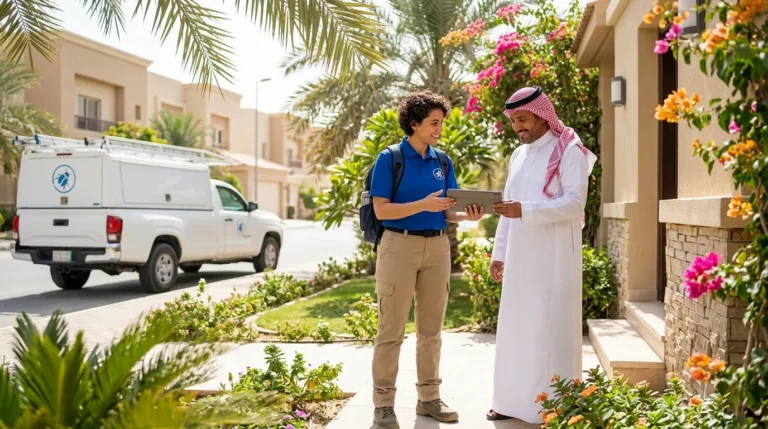
- Use Real Photos of Your Team: Replace stock photos of generic insects with images of your branded trucks, uniformed technicians, and local team members to build trust and security before a house visit.
- Clear, Frictionless Calls to Action: Ensure every email has a single, bold button leading directly to an online booking portal or a quick-call phone line.
Also Read: Best Ai Tools For Private Equity

2 Comments